


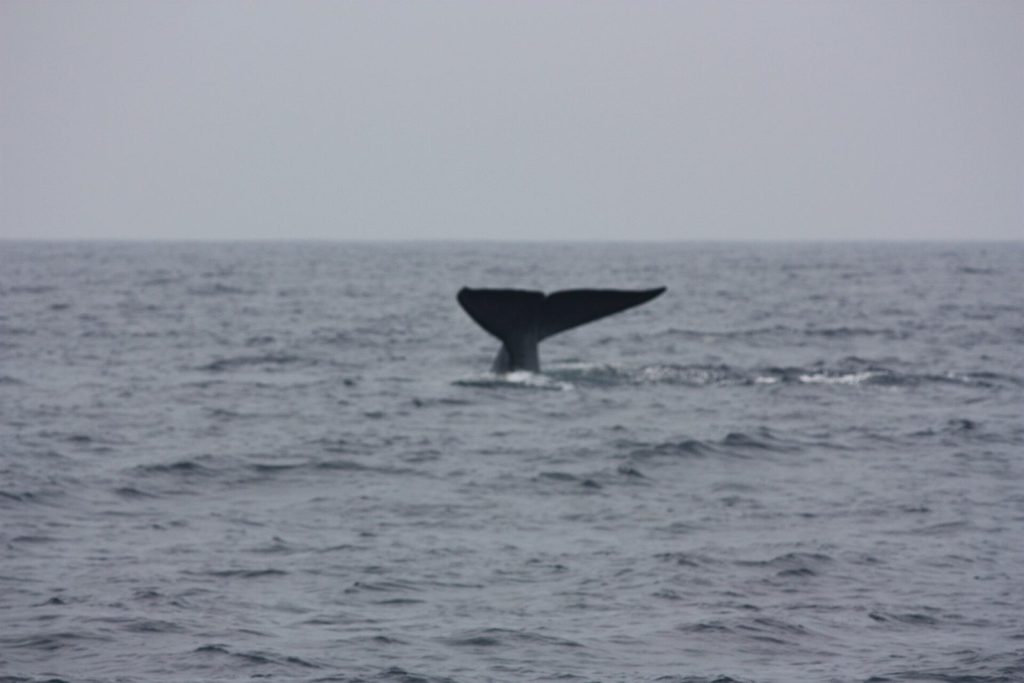
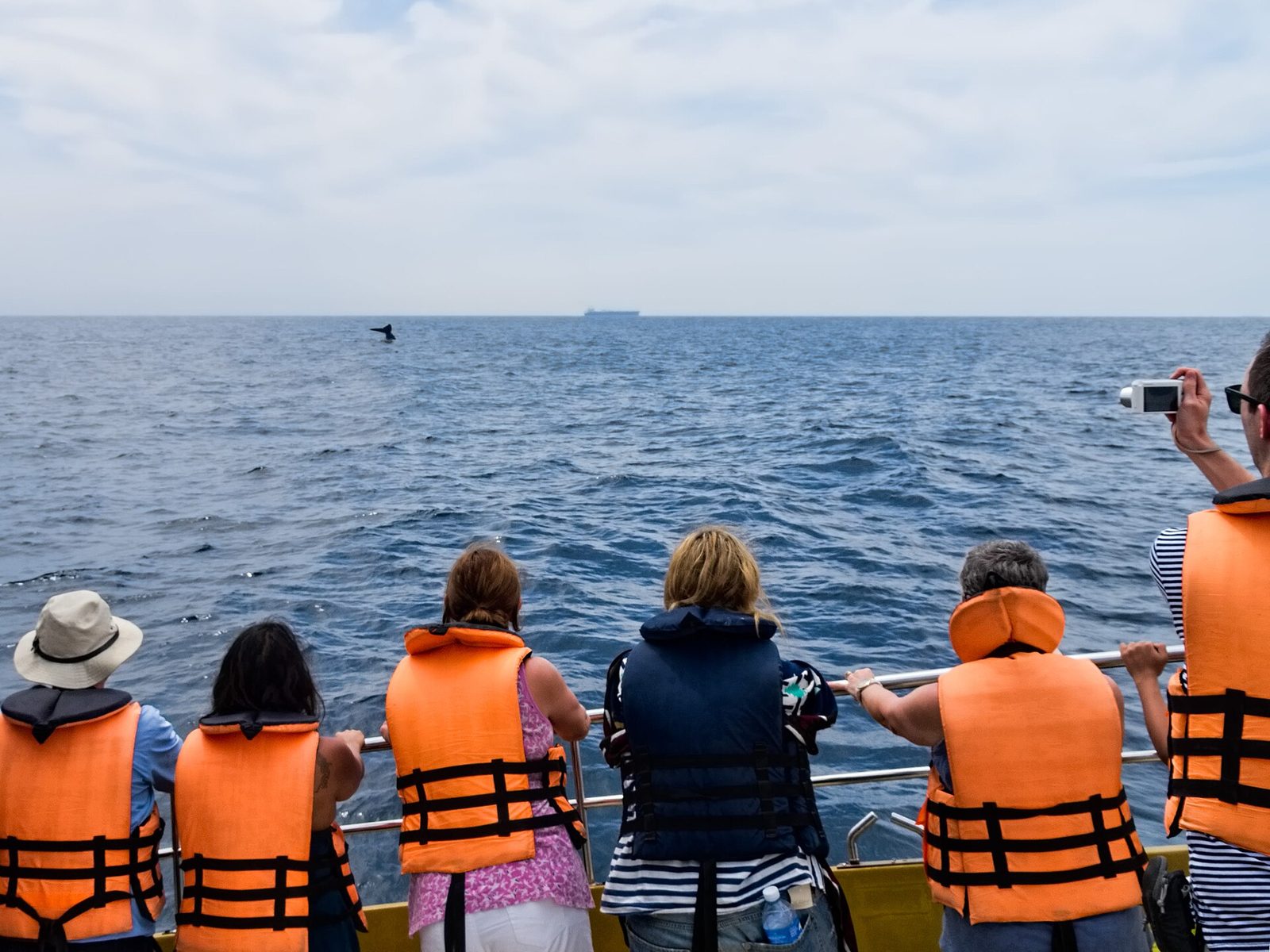
Off Mirissa, on Sri Lanka’s south coast, the continental shelf is so narrow that blue whales, the largest animals that have ever lived on Earth, pass just a few kilometres from the shore. It is one of the best places in the world to see them.
A blue whale can be more than 25 metres long and weigh over 100 tonnes. Seeing one blow at the surface, then dive and lift its huge tail fluke, is a memory you never forget. In Sri Lanka, some of these giants live all year round in the warm waters of the Indian Ocean, which makes encounters particularly frequent off the south coast.
In just a few years, Mirissa has become the capital of whale watching in Sri Lanka. Every morning a fleet of boats leaves the little fishing harbour, from large cruisers to more modest craft. They are not all equal: comfort, keeping a proper distance, a naturalist guide on board… the choice of operator makes a big difference to the experience, for you and for the animals. A trip usually lasts four to six hours and leaves at dawn, so it is best to be prepared, especially if you are prone to seasickness.
The experience is not just about the whales. As soon as you leave the harbour, you sail along a coast lined with coconut palms, then head out to sea as the sun rises over the ocean. Flying fish leap in front of the bow, seabirds follow the boats and, when the sea is calm, the water takes on silvery reflections. The crews, often former fishermen, spot the blows several kilometres away and guide passengers to the best side of the deck. Every trip is different: some days a single whale lets you approach for long minutes; on others, pods of dolphins escort the boat, leaping through the waves. A whale-watching tour in Sri Lanka takes a little patience, but the reward is worth it: few places in the world let you get so easily close to the largest animal on the planet. Remember to bring a light jacket, sun cream and a camera with a good zoom.
A typical trip starts very early: meet at the harbour around 6.30 am, a light breakfast served on board, then a long run out to sea while the crew scans the horizon. When the first blow is spotted, the boat slows down and approaches gently, and everyone holds their breath waiting for the animal to surface again. Encounters can last a few seconds or several minutes, then the search starts again. The boat usually returns in the late morning, often with a detour along the coast. The rest of the day is spent quietly on Mirissa beach, recovering from the emotion and the swell. Well prepared, a boat trip in Mirissa becomes one of the strongest memories of a journey, even for those who have never been to sea. A securely fastened cap and a bottle of water will be your best friends on board.
From November to April, boats head out every morning to meet them. With a little luck, you will also see spinner dolphins, sperm whales or Bryde’s whales. Here is how to choose your trip and enjoy it while respecting the animals.
🧳 My personal experience
I have done four whale-watching trips from Mirissa, with three different operators. The meeting time is always very early, around 6.30 am, at the harbour. Prices paid: between 45 and 55 euros per person, with a basic breakfast on board (sandwich, fruit, tea). Booked the day before through my guesthouse.
An honest assessment: two successful trips with blue whales seen up close, one trip with only dolphins, and one failed trip because the sea was too rough, when half the passengers were sick. The run out to sea often takes more than an hour, and you get back in the late morning, around 11 am or noon. It is long, and there is not much to do between sightings.
What bothered me most was the behaviour of some boats: when a whale is spotted, several of them race towards it at the same time. On one of my trips, there were six boats around the same animal, which dived and did not come back up. The last operator I chose kept its distance and cut the engine; that is the one I recommend to my friends.
My practical tips: take a seasickness tablet before leaving, even if you never get seasick, sit in the middle of the boat, and don’t eat too heavily the night before. Also ask whether the operator offers a free second trip if you see nothing: some do, and I benefited from it once.
My verdict: a whole morning, from 6.30 am to about noon, for 45 to 55 euros. Two trips out of four really successful. Bring: seasickness medication, a windbreaker, sun cream and a cap you can fasten. Avoid: operators advertising very low prices, often the ones that crowd the animals the most.
📋 At a glance
| 📍 Location | Mirissa harbour, south coast |
| 💶 Price | About €40 to €60 per person |
| ⏱️ Duration | 3 to 5 hours at sea |
| 🥾 Difficulty | ⭐⭐⭐⭐☆ Easy, but watch out for seasickness |
| ⏰ Season | November to April (best months: December to March) |
| 🐋 Species | Blue whale, dolphins, sometimes sperm whales and rorquals |
📍 Where do the whale-watching trips leave from?
Trips leave from the small fishing harbour of Mirissa, west of the beach. The village, one of the most pleasant on the south coast, is 35 km from Galle and about 3 hours from Colombo airport by motorway.
- 1Secret Beach · ≈ 1 km
- 2Parrot Rock · ≈ 1 km
- 3Coconut Tree Hill · ≈ 2 km
- 4Baie de Weligama · ≈ 6 km
- 5Plage de Polhena · ≈ 8 km
🏛️ Why do whales pass by Mirissa?
South of Sri Lanka, the seabed drops very quickly to more than 1,000 metres deep. The krill-rich waters attract blue whales, which migrate between the Indian Ocean and the Arabian Sea following the monsoons.
Unlike many populations, some of the region’s blue whales seem to stay all year in the northern Indian Ocean. During the south-west monsoon (May to October), the sea becomes too rough in the south, and sightings take place instead off Trincomalee, on the east coast.
👀 What happens on a trip?
- Around 6 – 6.30 am: meet at the harbour, life jackets handed out and a light breakfast on board.
- For 1 to 2 hours: the boat heads out to sea; the crew watches for blows on the horizon.
- The sighting: when a whale is spotted, the boat approaches to the regulation distance. You often see the back and the blow, and sometimes the famous tail fluke as it dives.
- The return: around 10 am – noon depending on the sightings.
🚶 How to get to Mirissa
➡️ From Colombo or the airport
Allow about 2.5 to 3 hours on the Southern Expressway, by car with a driver or by express bus to Matara.
➡️ By train
The coastal line serves Weligama and Matara; finish by tuk-tuk (10 to 20 minutes).
➡️ From Galle
45 minutes by car or local bus.
➡️ To the harbour
From your accommodation in Mirissa, you can reach the harbour on foot or by tuk-tuk; many operators will pick you up.
💶 Prices and times
- Group trip: about €40 to €60 per person, breakfast often included.
- Private trip: much more expensive, to be negotiated.
- Guarantee: some operators offer a free second trip if no whale is seen.
- Booking: the day before, through your accommodation or an agency in the village.
🥾 Difficulty and accessibility
The trip is open to everyone, but the swell can be strong and seasickness is common. Young children and sensitive people may find the time long. Boats do not always offer much shade.
⏰ When to go
- November to April: whale season in Mirissa, with a generally calm sea.
- December to March: the best months for sightings.
- May to October: the monsoon makes the sea rough; trips stop or become rare.
- In the morning: all trips leave at dawn, when the sea is calmest.
💡 Our tips
- Choose an operator that respects approach distances and does not chase the animals.
- Take a seasickness tablet the night before and in the morning.
- Bring sun cream, a hat, a light windbreaker and protection for your camera.
- Sit at the back of the boat, where it moves the least.
- Keep your expectations reasonable: you mostly see the whales’ backs and blows, rarely breaches.
🛏️ Where to stay in Mirissa
Mirissa has a wide choice of accommodation, often just a few minutes from the harbour.
🏨 Mirissa guesthouses
📍 Mirissa · Budget · 💶 €20 – 45 / night
Simple rooms a stone’s throw from the beach and the harbour, perfect for a dawn start.
🏨 Paradise Beach Club
📍 Mirissa · Mid-range · 💶 €60 – 110 / night
Right on the beach, with a pool: the perfect setting after your boat trip.
🏨 Cape Weligama
📍 Weligama · Luxury · 💶 €350 – 700 / night
Villas perched on a clifftop facing the ocean, a few minutes from Mirissa.
🧭 What to do nearby
After your boat trip, make the most of the finest stretch of the south coast:
- Coconut Tree Hill (≈ 2 km): the palm-covered hill, at sunset. Our Mirissa guide
- Secret Beach (≈ 1 km): a small cove for a quiet swim. Our Mirissa guide
- Weligama Bay (≈ 6 km): the ideal spot to learn to surf. Our south coast guide
- Galle Fort (≈ 35 km): the UNESCO-listed colonial old town. Discover Galle
- Yala National Park (≈ 2.5 hrs): the kingdom of the leopard. Discover Yala
🗺️ In our itineraries
Mirissa and its whales feature in our winter tours:
🔗 Useful links
- There is no single official website for whale-watching trips: book with recognised operators.
- Sri Lanka Tourism: the official website of the Sri Lanka tourist board.
- French travel advice: the recommendations of the French Ministry of Foreign Affairs (in French).
❓ Frequently asked questions
Am I sure to see whales in Mirissa?
Sightings are very frequent from December to March, but not guaranteed. Some operators offer a second trip if no whale was seen.
What is the best time of year?
November to April, peaking from December to March. From May to October, the sea is too rough.
Are the trips suitable for children?
Yes, from around 6 or 7 years old, if the child copes well with boats: the trip lasts several hours.
Can you see whales elsewhere in Sri Lanka?
Yes, off Trincomalee on the east coast, mainly from March to August.